Insights

Why M&A branding starts before the deal closes
27th October 2026
Every deal has a moment, usually a few weeks before it’s announced, when someone outside the deal team asks what the new company will be called. Nobody has a good answer. Heads of terms are signed, the lawyers are counting down to completion, and the name on the door hasn’t come up once.
Sadly, that’s normal. Richard Ettenson and Jonathan Knowles went through more than 200 mergers worth over $250 million each for MIT Sloan Management Review. In nearly two-thirds, brand strategy had low-to-moderate priority before the merger. So the brand gets sorted after completion. By then staff, clients and the trade press have filled the silence with their own version of events.
There’s no shortage of deals to learn from. The ONS counted 353 mergers and acquisitions involving UK companies with a change in majority ownership between April and June 2026. We’ve worked on mergers and acquisitions across our thirty years, and the ones that go well have something in common. They treat M&A branding as part of the deal, not a tidy-up job for later.
Why brand gets left until last
Deals are run by people who are very good at numbers and contracts. Brand looks soft next to a valuation, so it slides down the agenda. Then completion day arrives. There’s a press release to write, two websites saying different things, and a few hundred employees checking LinkedIn to find out what’s happening to them.
A much-quoted Harvard Business Review piece from 2011 says studies put the failure rate of mergers and acquisitions at 70% to 90%. We won’t pretend brand is the main reason. It’s where a struggling integration shows first, though. Clients notice when their account manager can’t explain the new structure, and good people leave when nobody tells them what the combined business stands for.
The first decision is brand architecture
Before anyone opens a design file, the leadership team has a structural question to settle. Does one name absorb the other? Do both survive under a parent? Should the combined business have a new name altogether, or do you run both for a while and decide later? That’s brand architecture, and it’s the part of brand strategy a merger can’t skip.
No option is right for every deal. It comes down to which name clients trust more and where the business is heading.
SRVO is a good example of the new-name route. Odevo Group had acquired three established regional property consultancies, Shaw & Co, Cardoe Martin and Trinity Surveyors, and wanted one business that could compete across the UK. When three firms come together, picking one of their names can leave the other two feeling taken over. So we ran surveys and workshops with people from all three businesses, then worked with the management teams on a new name and brand identity. SRVO launched in January 2025 as a property services business rather than another surveying practice, and it has carried on adding acquisitions under the same name since.
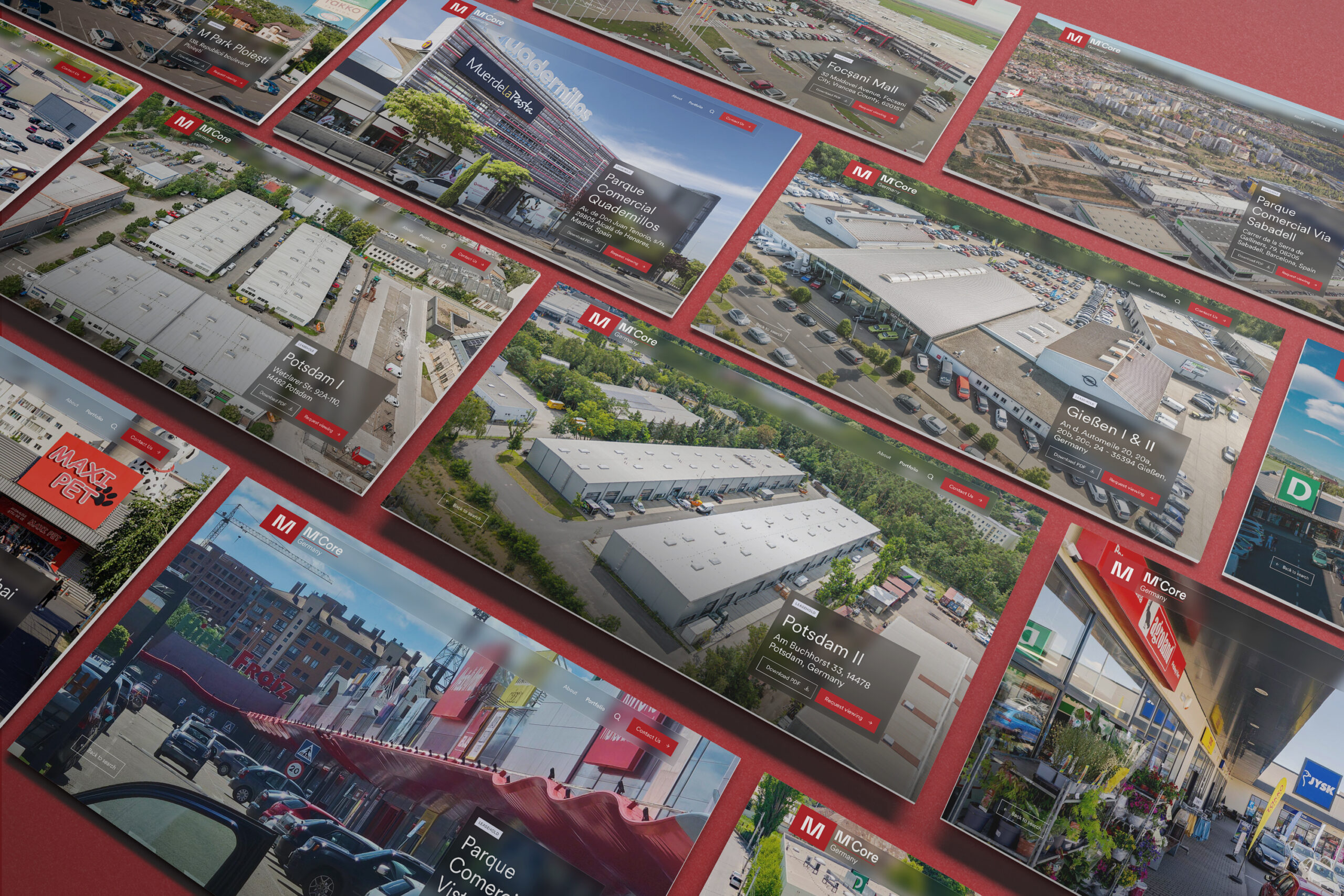
M Core went the other way. It had grown by bringing family-run property companies together, and each had its own identity. Investors and tenants already treated M Core as one organisation, though, and every acquisition widened the gap between how it looked and how it worked. The answer was one name and one visual language across seven countries, with a connected M Park sub-identity for its UK retail parks.
Your people hear it first, or they hear it wrong
Employees are the first audience in any merger and often the last to be properly briefed. Most of them want to know two things: whether their job is safe, and whether the place they chose to work is about to change beyond recognition.
That’s why we bring people from each business in early, as we did with SRVO. It isn’t consultation for the sake of it. Listen to how people talk about their own firm and you’ll hear what they’re scared of losing. Ignore that and the new brand gets quietly resisted, usually in the email signatures first. Get it right and an employer value proposition gives both teams a reason to stay. It also gives them the same answer when a client asks what’s changed.
Clients need one story and one website
Clients don’t read integration plans. They see your emails and proposals, and they notice when two teams describe the same service differently. Six months after launch, an old logo on a pitch deck says more about the integration than any press release.
The website is where it usually gets messy. Two domains, two sets of case studies, service pages that overlap. Each old URL needs a permanent (301) redirect to the closest page on the new site, not just a blanket redirect to the homepage. Google’s guidance on site moves sets out how to do that without throwing away the search visibility both firms built up. It’s the sort of job our digital delivery team plans before launch day rather than after it.
AI assistants remember the old names
Here’s something dealmakers didn’t have to think about five years ago. Buyers now ask ChatGPT or Gemini to explain who a firm is and who else they should consider. Those assistants describe your merged business from whatever they can find, and straight after a deal that’s mostly old pages, old press releases and old directory listings.
Try it a few weeks after launch. Type the new company name into ChatGPT and see what comes back. Two separate firms? Then that’s the picture anyone using AI to build a shortlist is getting too.
Most of the fix is unglamorous admin. Change the Companies House records, LinkedIn pages and Google Business Profiles in launch week. Redirect the old sites. Then publish a single page that explains, in plain English, who the combined business is and what it does. We go into this in more depth in making your brand agentic ready, and it’s a core part of our agentic brand strategy work.
Before the announcement: a short checklist
- Settle the brand architecture while the deal terms are still being negotiated.
- Talk to people from every business before you name anything.
- Get the combined story down to two sentences. Read them to a client you trust and watch their face.
- Map every old URL to its new home before launch day.
- Make sure staff hear it from you before they read it in the trade press.
- In week one, change every public profile. A month later, ask the AI assistants what they think you are.
Frequently asked questions
What is M&A branding?
Everything to do with how merged or acquired businesses show up afterwards. The name and structure come first. The story, the identity and the way you explain it to staff and clients follow from those.
Should you rebrand after a merger?
Sometimes not. Where one name is much better known, folding the smaller one into it is often sensible, and cheaper. A new name earns its keep when similar-sized firms join up, or when the business wants to become something neither was, which is what happened with SRVO.
When should branding start in a merger?
Ideally while the deal’s still private. Your choice of architecture affects the announcement and how staff are briefed, and it changes the integration plan too. Design can come a bit later.
What is brand architecture in a merger?
Think of it as the family tree for your names. You might have one master brand, a parent that endorses its sub-brands, a house of brands that each stand alone, or a brand-new name over the lot.
What happens to the old websites after a merger?
Normally they’re merged into one. Point each old page at its nearest match on the new site with a permanent redirect, and people (and Google) end up where they expect. Most of what the old sites earned in search carries over that way.
Underscore is a London branding agency, and we’ve spent thirty years helping businesses through moments like this. If you’re working through a merger or acquisition and want a second opinion on the brand side, we’d be glad to talk.